Tampilkan postingan dengan label GLBT Entertainment. Tampilkan semua postingan

Selasa, 21 Juni 2011

Reverend's Reviews: Modern Gay Classics on DVD

Longtime fans of independent queer cinema will probably find it hard to believe that it's been 20 years since Todd Haynes' Poison hit the screen. The controversial anthology of three mini-movies exploring the darker side of the gay experience debuted at the 1991 Sundance Film Festival and won its Grand Jury Prize. It also won the prestigious Teddy Award at the Berlin International Film Festival.

Poison is being re-released today by Zeitgeist Films as a special, remastered 20th anniversary edition DVD. Packed with rare extras and a 16-page booklet, it provides an excellent opportunity to re-discover the film or see it for the first time. The success of Poison enabled Haynes to write and direct such popular queer titles as Velvet Goldmine, Far from Heaven and the recent HBO miniseries adaptation of Mildred Pierce.


The filmmaker's classic opens with the foreboding words, "The whole world is dying of panicky fright." Haynes then intersperses scenes from the stylistically-diverse "Hero," "Horror" and "Homo" over the next 85 minutes. The first is a mock TV news report of a boy who kills his sexually abusive father and then, inexplicably, flies away. "Horror" serves simultaneously as a black & white homage to 1950's B-movies and as a metaphorical account of the AIDS epidemic, focusing on a well-intentioned scientist who isolates the human sex drive with devastating results. "Homo," inspired by the work of gay writer Jean Genet, is a dream-like but disturbing romance between two prison inmates. All three stories are beautifully photographed by Maryse Alberti and Barry Ellsworth.


Upon its release, Poison was denounced by conservative commentators such as Ralph Reed and the American Family Association's Donald Wildmon. They objected to both Haynes' subversive, pro-gay commentary and the graphic nudity and sex depicted in the "Homo' segment, especially since the film had received funding from the National Endowment for the Arts. Of course, many more critics — including J. Hoberman (whose original essay from The Village Voice is included in the DVD's booklet), David Ansen and Richard Corliss — lauded the movie.

Poison also launched the careers of producers Christine Vachon and James Schamus, who have supervised many of the most significant independent films of the last 20 years. Schamus eventually became president of Focus Features, which released Far from Heaven, Brokeback Mountain, Milk and the current Beginners. He and Vachon as well as Haynes are featured in a special 20th anniversary Q&A about their achievements. As made clear by the new, remastered DVD, the impact of Poison has been far-reaching.


1981's German production Taxi zum Klo (in English, Taxi to the Toilet) has left a similar mark on queer film history and was also recently made available on DVD in a 30th anniversary Director's Cut by QC Cinema. It was written and directed by Frank Ripploh, who also stars as a respected schoolteacher with a secret gay life. Set in West Berlin, it has been hailed as "the first masterpiece about the mainstream of male gay life." While dated in some respects and perhaps not the most positive portrait of our community by today's standards, Taxi zum Klo is nonetheless an enduring testament to the gay experience, then and now.

Reverend's Ratings:
Poison: A-
Taxi zum Klo: B-

Review by Rev. Chris Carpenter, resident film critic of Movie Dearest and the Blade California.

Minggu, 05 Juni 2011

Reel Thoughts: Absolute Beginners

Parents are mysterious creatures to their kids, and sometimes it takes a lifetime to figure them out. Mike Mills’ engrossing and uplifting film, Beginners, seeks to document his own experiences with his parents, in a fictionalized way. It is such a specific, personal journey, full of details that you know came straight from Mills’ life, yet Beginners feels relatable to anyone who has turned around a strained relationship with a parent or anyone who has embarked on a romantic relationship not knowing if they have what it takes to make it work. The film has whimsical elements, like the way Arthur the Jack Russell Terrier has ongoing subtitles to reveal his feelings, but overall, the film is a leisurely-paced love story paired with a late-in-life coming out tale.

Oliver, played by Ewan McGregor, is packing up his late father Hal’s (Christopher Plummer) belongings as the film begins, and in flashback, you are introduced to the man who, after being widowed at age 75, decides to come out of the closet. The film is both a tribute to a man who, being a product of the 50’s, denied his true sexual orientation his whole life, only to embrace it in the end, and an intelligent examination of the effect parents have on their children and the way they interact with others. Oliver is closed off emotionally, and doesn’t stick with relationships very long. He watched his mother Georgia (Mary Page Keller), who made Oliver her confidant and surrogate best friend, suffer from the loneliness of being in a marriage with a closeted gay man. At the same time, Hal was a distant and absentee father.


Oliver meets French actress Anna (Mélanie Laurent from Inglourious Basterds) at a costume party where she is playing mute to save her voice. Their courtship is sweet and tentative, since both come with a lot of baggage. Hal, on the other hand, embraces every aspect of gay life, trying out bars where youth rules supreme and then settling in with a great group of “Prime Timers” who host movie nights and dinners out in West Hollywood. He even gets a wild and crazy boyfriend named Andy (ER’s Goran Visnjic, in a horrible bowl cut). But Hal’s days are numbered, it turns out, and Oliver becomes much closer with his father than he ever was growing up. Mills keeps the tone even and mostly light-hearted, but the reality of losing a parent is explored in a way everyone can relate to; don’t be afraid if tears flow... it’s good for you.

Beginners has many moments of emotional truth, and the performances could not be better. Plummer is sure to be nominated for a Best Supporting Actor Oscar, and he does a great service to a group in the gay community that tends to be ignored, namely older gay men. McGregor has a much quieter role to play, but he does it with his usual intelligence and intensity. Laurent is quirky and beautiful and Cosmo the dog makes the perfect cinematic companion for Oliver. If you can handle a summer movie that isn’t full of shape-shifting robots or Caribbean pirates, Beginners is a nice, quiet beginning to the season.

Review by Neil Cohen, resident film critic of Movie Dearest and Phoenix's Echo Magazine.

Kamis, 02 Juni 2011

Reverend's Reviews: Two Spirits, One Brief Life

Traditional Navajo culture used the word nadleehi, or "two-spirit," to refer to male-bodied persons who possessed a feminine nature. Some today may call them "effeminate" or "transgender," often in a disparaging sense. There was a time, however, when such people enjoyed an honored position in North America.

Sadly, Fred Martinez, Jr. was not one of them. The 16-year old from the border town of Cortez, Colorado became one of the youngest hate crime victims in modern history when he was brutally murdered in 2001. Martinez's only "offense" was to put on make-up and dress in female attire, which led his assailant, Shaun Murphy, to abduct him from a local rodeo one night. Murphy would later brag to friends about having killed "a fag." Martinez's body laid in the desert for five days before it was discovered by two boys at play.

An insightful new documentary about the Martinez case will make its premiere in June. Appropriately titled Two Spirits, it will air as part of the PBS series Independent Lens. The film will also have several special theatrical screenings in California and elsewhere. Please visit the PBS website for more information.


Two Spirits, directed by Lydia Nibley, utilizes gorgeous location photography (by David A. Armstrong) and an effective mix of interviews with those who knew Martinez, archival footage, and recreations of moments from the young nadleehi's life and death. It doesn't take viewers long to agree with one commentator who remarks, "The place where two discriminations (in this case, against Native Americans and transgender people) meet is a dangerous place to live."

Efforts by some to eradicate two-spirit people began long before 2001. The Spanish conquistadores were horrified to discover nadleehi in America, and fed them to wild dogs as a form of entertainment. Later, the post-Civil War schooling system established by the US government for Native Americans "sought to rub their culture out of them," according to the film.

Martinez's mother, Pauline Mitchell, is interviewed extensively in Two Spirits. Sad but dignified, she recounts her experience raising her unique child and trying to protect him from a prejudiced society beyond their community. Martinez didn't have to travel far from home (just a few miles) to discover how vicious the outside world could be. Mitchell continues to mourn her son-daughter's loss nearly ten years later, despite several mystical experiences she says she has had wherein Fred has appeared to her.


As illustrated in the film and by Martinez's life, ours is "a many-gendered world." Navajos have traditionally believed that there are four genders among human beings: males who identify as males, women who identify as females, men who identify as females and women who identify as males. The term "two-spirit" is often applied to the latter two, but it ultimately describes the entire spectrum of gender and sexual expression among Native Americans.

Two Spirits has been recognized by the American Library Association (ALA) as one of 15 Notable Videos for Adults released in the past two years. The documentary and the educational outreach efforts of the Fred Martinez Project have also been awarded the Monette-Horwitz Distinguished Achievement Award "for outstanding activism, research, and scholarship to combat homophobia." With or without such kudos, the film should not be missed.

Reverend's Rating: B+

Review by Rev. Chris Carpenter, resident film critic of Movie Dearest and the Blade California.

Selasa, 31 Mei 2011

Monthly Wallpaper - June 2011: Queer Cinema

In celebration of Gay Pride month, Movie Dearest once again offers up a special calendar wallpaper for June paying tribute to some of the best in queer cinema.

The 2011 edition features such old and new GLBT favorites as The Hours, A Single Man, Little Ashes, The Boys in the Band, Heavenly Creatures, The Wedding Banquet, Breakfast on Pluto and The Birdcage.

All you have to do is click on the picture above to enlarge it, then simply right click your mouse and select "Set as Background". (You can also save it to your computer and set it up from there if you prefer.) The size is 1024 x 768, but you can modify it if needed in your own photo-editing program.

Senin, 23 Mei 2011

Reverend's Interview: Mike Mills Memorializes His Gay Dad in Beginners

No one was more surprised than graphic artist turned filmmaker Mike Mills when his father came out as a gay man shortly after the death of Mills' mother. Mills has parlayed his unusual experience into the alternately funny and dramatic new movie Beginners, which opens June 3 in Los Angeles and will expand throughout California and the nation next month. I had the opportunity to watch the movie in advance and speak with Mills about it.

"I have so much at stake with this project: My memories of my dad and my career as a filmmaker," the sensitive, soft-spoken screenwriter/director said. "I feel more like a sharer than an author." Beginners is only Mills' third cinematic outing, following the 2005 film festival favorite Thumbsucker and the 2007 documentary Does Your Soul Have a Cold? "This script was developed with the belief that something this personal can become universal."


Mills' father was 75 years old when he came out and had been married to his mother for 45 years. When his parents married in the 1950's, conservatism and homophobia were the norm in the United States. Mills' father told his wife-to-be he was gay prior to their marriage. She was Jewish, and faced as much difficulty fitting into post-war America as he did. Subsequently, Mills says, "My mom took off her Jewish badge and he took off his gay badge."

Following his mother's death and dad's revelation, their son watched with equal parts surprise, confusion and admiration as his father became heavily involved in Southern California gay life and began a relationship with a younger man. "He just started living this explosive new life," marveled Mills. "He became more emotionally alive than I'd ever seen him." Just five years later, however, the elder Mills was diagnosed with terminal cancer and passed away. His father's death served as the true catalyst for what would become Beginners.


Mills was fortunate to secure the participation of two fine actors in the roles based on his father and himself: Christopher Plummer (The Sound of Music and an Oscar nominee for 2009's The Last Station) and gay favorite Ewan McGregor (Moulin Rouge!, Star Wars Episodes 1-3). The filmmaker wrote them both very personal, impassioned letters asking them to be in his movie. While both actors were initially hesitant to play characters so close to Mills, they eventually agreed based on the strength of Mills' screenplay and his reassurance that they could make the parts their own. They deliver excellent performances, as do fellow cast members Mary Page Keller (as Mills' mother), Mélanie Laurent (Inglourious Basterds) and ER's Goran Visnjic, who plays Mills' father's late-in-life boyfriend. An impressive Jack Russell terrier also plays a pivotal role.

"The experience I'm most trying to communicate with Beginners is that of an adventure, the feeling of something breaking open," Mills shared. "While this film has illness and death, it's about beginnings, change, and how deeply funny life can be in its most serious moments." It is a touching movie with truly universal appeal. As Mills has learned via feedback from audience members at early screenings, his father's long-closeted homosexuality wasn't as unique as the filmmaker originally thought.


Beginners is composed of both autobiographical and fictional elements. "I wanted to root around between the way things really happened and the way we choose to remember them," Mills says. In the film, Mills goes back and forth between events in 1955, when his parents married, and 2003, when his father died. The historical sequences include a powerful gay rights montage set to words about "becoming real" taken from the classic children's book, The Velveteen Rabbit.

"The film is hopefully asking, 'What is real, anyway?' Are these memories real, or did I get them wrong?" according to Mills. "I lived with a man whose biography was somewhat fictionalized, a performance of sorts. He had to hide deep, personal, intimate things."


While Beginners tells a broader story than just a gay-themed one, there is considerable gay interest in it. "To be honest, the gay community is the audience I am most concerned about," Mills told me. "My dad's gayness taught me so much as a straight man, but it's definitely a film by a straight man curious about his gay dad and I'm not sure how that will resonate." I assured Mills I didn't think he has anything to worry about; between Plummer's liberated performance and the overall humanity of the film, Beginners will move gay and straight viewers alike.

"I do think my father would have loved coming out to the world through Beginners," Mills concluded. "He would have seen it as keeping the party going — but with a larger invite list."

Interview by Rev. Chris Carpenter, resident film critic of Movie Dearest and the Blade California.

Selasa, 17 Mei 2011

Reverend's Reviews: Short Stack

The short films shown at various film festivals sometimes end up outshining the feature offerings. Recognizing this, The Film Collaborative and First Run Features have teamed up to gather some of the best shorts from the 2010 GLBT circuit and release them on DVD. Volumes 1 of Fest Selects: Best Gay Shorts and Fest Selects: Best Lesbian Shorts are both out today.

While they vary wildly in tone and style, the eight films included on the Best Gay Shorts edition are generally excellent. A couple of them — My Name is Love and Steam — may strike some as uncomfortably dark, and the partly animated Mouse's Birthday is just plain bizarre, but the high quality of these assorted filmmakers' techniques can't be denied.


After, a stylish tribute to the stories of Dennis Cooper, kicks off the collection. Written and directed by Mark Pariselli, it is awash in Cooper's trademark mix of kink and tragedy. Three gay college students sit silently on the stoop of their house, watching a group of seemingly straight boys play football at a park across the street. When an athlete being observed unexpectedly shows a tender interest in one of them, each of the students fantasizes about a sexual encounter with him. Faithful as it is to Cooper, don't expect a happy ending.

Two of the films featured were shown at last year's Long Beach Q Film Festival, for which I served as a programmer. I'm very happy to see them included here. Gaysharktank.com, by the clever Guy Shalem, is a hilarious expose of modern gay life utilizing the ultimate online dating site. The short's stellar cast includes Coco Peru, Jack Plotnick, Jai Rodriguez and Drew Droege. Pierre Stefanos' sweet Bedfellows spins a decades-spanning love story. While the two lead actors don't age convincingly during the 30+ years depicted, it otherwise all but proves that true love can be found when least expected.


Gayby is a very funny short about a straight woman desperate to bear a child before her biological clock runs out. With what could be termed mixed motives, she turns to her now gay college-era boyfriend to help her conceive "the old fashioned way." Writer-director Jonathan Lisecki has a great ear for contemporary dialogue and is a sharp observer of relationships between women and the gay men they love.

Matthew Wilkas, the attractive actor who plays Gayby's male lead, also headlines another film included in Best Gay Shorts entitled Curious Thing. Billing itself as "based on true stories" of straight-bi-gay confusion, it focuses on the complex attraction between two seemingly straight guys. It will likely remind viewers, as it did me, of one's first crush on our typically straight best friend in high school or college. The actors' performances here are particular good.


The aforementioned My Name is Love, Mouse's Birthday and Steam round out the collection. The first is Swedish filmmaker David Fardmar's painfully autobiographical story of a young man's first gay encounter going horribly awry. Mouse's Birthday, by Barry Morse, relates in avant-garde (and then some) fashion an encounter between a rodent, a cockroach and a thong-clad, mohawk-sporting muscle boy. It serves as both cautionary tale and pride statement, with fun choreography by fellow indie filmmaker PJ Raval.

Finally, the Twilight Zone-esque Steam focuses on two hot men (literally and figuratively) who find themselves mysteriously trapped in a doorless gym's sauna following a sexual encounter between them. The denouement struck me as somewhat muddled theologically and morally, but the short gets considerable points for its provocative originality. And did I mention the guys are hot?

In short (pun intended), these new gay and lesbian releases are well worth one's investment.

Review by Rev. Chris Carpenter, resident film critic of Movie Dearest and the Blade California.

Senin, 09 Mei 2011

Reverend's Preview: From Chastity to Chaz

Even though I was just a few years older than she was, I vividly remember little 2-year old Chastity Bono sending all us viewers a good night kiss at the end of her parents' hit 1970's TV show, The Sonny and Cher Comedy Hour. Her mother, of course, went on to become an acclaimed solo singer and Academy Award-winning actress. Her father was a sometime actor (including a role in the original Hairspray) before serving as mayor of Palm Springs and, a few years later, dying tragically in a ski accident.

And little Chastity? Well, she is now a he in the wake of successful gender-reassignment surgery and hormone therapy that began in 2009. Having legally changed his name to Chaz Salvatore Bono (the middle name was his father's birth name), the now-son of Sonny and Cher is the subject of an eye-opening documentary, Becoming Chaz. It is scheduled to premiere on OWN: The Oprah Winfrey Network tomorrow night, but Reverend got an advance look at the film.

"I've hated my body since puberty," Chaz says on camera of his pre-op state. "In high school, I often went to bed praying I would wake up as a boy." He started considering transitioning from female to male in the late 1990's as he saw cultural acceptance growing, partly due to the acclaimed movie Boys Don't Cry. Chaz gratefully recalls Sonny encouraging him to dress and act like a boy following his parents' divorce when Chaz was four years old.


Years prior to the decision to transition, Chastity had come out publicly as a lesbian. Jennifer Elia, Chaz's longtime partner, plays an integral part in the documentary. A recovering alcoholic, Jennifer's sobriety is put to the test during the "exhausting process" of Chaz's surgery and recovery. Chaz's own, 10-year addiction to prescription painkillers proved its own challenge, resulting in a low tolerance to the drugs intended to give him comfort during and after his initial operation and following six years of abstinence.

"I believe this happened when it was meant to happen," Chaz says of his transition. The post-op Chaz appears much happier in the documentary than he does before surgery, whether he is playing video games with good friend RuPaul, buying a suit for the premiere of his mother's movie Burlesque, or serving as a role model/consultant to trans children and their parents. On bravely going public with his decision to transition, Chaz reveals, "I'm doing this to try to put a public face on a serious issue."

Becoming Chaz also helps to answer a long-standing question on the lips of many: what has been Cher's reaction to her only daughter's decision to become a male? (She has a biological son by fellow singer Greg Allman.) Cher was initially silent but allows this film's accomplished directors, Fenton Bailey and Randy Barbato (who previously made 101 Rent Boys, Party Monster and the wonderful The Eyes of Tammy Faye) to interview her extensively.


"I wasn't happy," Cher says of her first reaction to Chaz's decision to go public. She later recounts hearing Chastity's (female) voice for the last time on her answering machine. "That's when it hit me." Whereas Jennifer does call Cher from the recovery room following Chaz's surgery to assure her everything had gone well, Cher apparently couldn't bring herself to be there personally.

One scene in the film shows Chaz watching his mother's appearance on Late Night with David Letterman in late 2010, and being moved by Cher's first public or private reference then to Chaz as a "he." Cher clearly continues wrestling with her child's decision but seems to be coming along. Be sure to watch through the end credits of Becoming Chaz to see Cher's and Chaz's face-to-face reunion at the Burlesque premiere.

Immediately following tomorrow's broadcast of Becoming Chaz on OWN, Rosie O'Donnell will interview Chaz and the filmmakers about their experience making it on The Doc Club with Rosie O'Donnell.

Review by Rev. Chris Carpenter, resident film critic of Movie Dearest and the Blade California.

Selasa, 26 April 2011

Reverend's Reviews: Straight & GLBT Collide in New DVDs

It seems appropriate for three new DVDs exploring mash-ups of the hetero and homo/bi/trans worlds at the beginning of GLBT Pride season. First out of the gate is Breaking Glass Pictures' Straight & Butch, which was just released today. This intriguing documentary follows the multi-year odyssey undertaken by Butch Cordora, an openly gay Philadelphia TV host, to create a calendar in which he and an assortment of straight men would pose together nude. In re-creating iconic images including Janet Jackson's hands-on-breasts Rolling Stone cover, a nude John Lennon embracing Yoko Ono, and The Beatles' Abbey Road album cover sans clothing, Cordora hoped to find common ground between gay and straight men in the most intimate of photographic situations.

While a few of the subjects were personal friends or co-workers of Cordora's before shooting and a couple are professional models, most are regular guys from the Philadelphia area. The film notes that 59 exclusively straight men in all were asked to participate, but 48 said "no" and refused to state their reasons for doing so on camera. A few wrote that their wife or girlfriend would be uncomfortable with them posing nude, at least with another man.

Those models who agreed include the husband of one of the photographers, a Whole Foods grocery store bag boy, a pizzeria owner, a professional wrestler, and a heavily-tattooed artist. There is also a nice ethnic mix among them, including two Black men, a Latino originally from Colombia, and an Asian. The men's initial comfort levels vary, as do their body types, but all save one come away from the experience of being photographed nude with Cordora feeling good about it. As one model remarks, "(The project) says something about our country or, more importantly, where our country could and should be" in terms of gay-straight relations. While Straight & Butch gets a little long and repetitive by the final shooting session, it is well worth watching.


Meanwhile, a lesbian-themed movie out May 3 on Wolfe Video, Bloomington, is generally worth avoiding. The plot initially focuses on the adjustment to college life in the titular Midwest city of a previously home-schooled young woman who also happens to be the former star of a cult science-fiction TV series à la Star Trek (to really drive the comparison home, the character's name is Jackie Kirk). Jackie, played by the Miley Cyrus-esque Sarah Stouffer, has good intentions of leaving showbiz behind and studying law. Things start to change, however, once she crosses paths with Abnormal Psychology professor Catherine Stark (the beautiful Allison McAtee).

Stark's reputation as a "vampire lesbo" (in the unflattering words of one student) who sleeps with her students precedes her. It isn't long before Stark confirms she is lesbian and begins an affair with Jackie. It also isn't long before Hollywood starts beckoning Jackie back for a movie version of her TV show. Fearful Catherine starts drinking and inexplicably sleeping with a man, while Jackie apparently realizes she needs to "straighten up" and have sex with a male fellow student if she is to have a chance at headlining a blockbuster movie.

Bloomington, written and directed by Fernanda Cardoso, starts promisingly but is ultimately compromised by its characters' shifting allegiances and alliances. Too much of the film is hard to swallow, from the casual way it treats an ethically-questionable sexual relationship between student and teacher to its perfunctory ending. Like Jackie, Cardoso may need to get back to basics academically.


The best by far of these new DVD releases is Casper Andreas' hilarious Violet Tendencies, out May 24 from Breaking Glass Pictures. Mindy Cohn, lovingly remembered by many of us as the irrepressible Natalie on the 1980's series The Facts of Life, stars as "the last fag hag" in Manhattan. Violet is adored by her large circle of gay friends and spends virtually all her free time with them. This makes it difficult for her to find romance with a "fag stag" or other straight man, for which she desperately longs, despite late nights on the "Frisky Friends" phone chat line and resultant, aborted dates.

As much as she hates to do so, Violet cuts herself off from her boys once she meets Vern, an ex-Mormon architect from Idaho who reminded me a lot of Geoffrey Rush in Shine. But the boys will have none of it, devoted to Violet's happiness as they are, and begin to seek a more ideal partner for her... who may unknowingly be right in their midst.

Violet Tendencies kept getting away from me when it played last year's GLBT film festival circuit, and I'm so glad I finally saw it. The film is chock full of relatable, well-drawn characters, razor-sharp dialogue and witty observations (the screenplay was written by Jesse Archer, Andreas's frequent collaborator), and fabulous New York locations. Cohn's performance and those of the supporting cast are great, and there are cameos by such NYC gay icons as Hedda Lettuce, Michael Musto and Randy Jones, a.k.a. the Village People's Cowboy.

To quote Violet's dating advice-dispensing, food-deprived fashion model co-worker, Salome: "Get off your racket" and see Violet Tendencies ASAP!

Reverend's Ratings:
Straight & Butch: B
Bloomington: C-
Violet Tendencies: A-

Review by Rev. Chris Carpenter, resident film critic of Movie Dearest and the Blade California.

Rabu, 20 April 2011

Reverend's Reviews: Behind The Boys in the Band

The tag line for the 1970 film adaptation of Mart Crowley's pioneering play The Boys in the Band jokingly declared, "It's not a musical." Be that as it may, an original cast album was released in 1968 based on the strength of the show's memorable dialogue. This is but one of many interesting facts recounted in Making the Boys, a fine new documentary about the evolution of the controversial play and subsequent movie. It opens this Friday in Los Angeles and will unspool in other cities this summer.

Produced and directed by Crayton Robey, Making the Boys incorporates interviews with Crowley, surviving cast members Laurence Luckinbill and Peter White, and archival footage from the play's first New York production as well as commentary by such luminaries as director William Friedkin (who helmed the film version); gay playwrights Edward Albee, Paul Rudnick, Larry Kramer, Terrence McNally and Tony Kushner; and actors Robert Wagner (whose late wife, Natalie Wood, was a close friend of Crowley) and Cheyenne Jackson. Judy Garland, Rock Hudson, Julie Andrews and Sal Mineo also appear in vintage scenes from home movies Crowley shot in the 1960's. If all this isn't enough gay "star power," out Oscar winning screenwriter-director Bill Condon serves as the doc's executive producer.


The Boys in the Band, for those younger readers who may be unaware, is set at a Manhattan birthday party celebrated by several gay men that quickly goes from happy to volatile. The birthday boy, Harold (a riveting performance by Leonard Frey), provokes his friends into revealing long-dormant secrets and jealousies. Alternately hilarious and uncomfortable (sometimes both at once), the play was embraced by many upon its 1968 premiere as an unflinchingly honest glimpse into gay lives, but it also angered many theatergoers for presenting what they felt were a number of gay stereotypes.

Crowley was concerned about this, according to the documentary, as well as whether his work was funny enough to be the comedy he primarily intended. In an attempt to console Crowley, the play's producer told him on opening night, "They've been laughing at gays since Aristophanes; they're not going to stop tonight." Crowley had hand-written the first draft of The Boys in the Band in five weeks and envisioned it as something of a gay version of Albee's Broadway and Hollywood smash Who's Afraid of Virginia Woolf? Crowley needn't had worried: he became the toast of New York and the play ran for a then-unheard of five years in addition to spawning the more modestly successful movie.

In the two years between the play's debut and the film's opening, a significant GLBT milestone occurred: the Stonewall riots. Whereas the stage version of The Boys in the Band was heralded as an initial step toward making gay men and their concerns better known, by the time the movie came, out gay men were front-page news thanks to Stonewall, and Crowley's work already seemed dated.


The 41 years since have helped situate The Boys in the Band as a revelatory time capsule that made other, more compassionate gay-themed plays and movies like La Cage aux Folles, Making Love, The Night Larry Kramer Kissed Me and Brokeback Mountain possible. As original cast member Peter White says in the documentary, "The legacy of The Boys in the Band is in the eye of the beholder."

Sadly, White, Luckinbill and Crowley are the only members of the original production team still living. The play's director, producer and other actors all succumbed to AIDS in the 1980's-90's. Tony Kushner, who wrote the gay theatrical masterpiece Angels in America, notes "The play and movie were long before the epidemic but not untouched by the epidemic." Friedkin, director of the movie adaptation, is still living and went on to make such classics as The French Connection and The Exorcist. He also returned to gay territory (Friedkin is straight) in 1980 with the generally-reviled Cruising, which starred Al Pacino as a sexually conflicted serial killer.

The Boys in the Band was briefly revived on Broadway in 1996 and the movie was released on DVD for the first time last year to mark its 40th anniversary. Making the Boys covers some of the same material as the supplemental shorts on the DVD, but the feature-length documentary is able to go into much more depth. They make excellent companion pieces. As Luckinbill admiringly says in Making the Boys, "Crowley made gay people ordinary" with his work. We've come even farther since.

Reverend's Rating: B+

Review by Rev. Chris Carpenter, resident film critic of Movie Dearest and the Blade California.

Selasa, 12 April 2011

Reverend's Preview: Bollywood Meets Hollywood

The 9th annual Indian Film Festival of Los Angeles (IFFLA) opens tonight, with red carpet festivities and five days of screenings taking place at the ArcLight in Hollywood. Among the films being shown are the Los Angeles premiere of the award-winning I Am Kalam and the closing world premiere Sunday of Disney's first Hindi-language production, Zokkomon.

In disappointing news for GLBT filmgoers of all nationalities, the controversial 2010 gay drama Dunno Y? Na Jaane Kyun is not included in the line up. It has been described as "India's answer to Brokeback Mountain" and reportedly includes the first gay kiss in Indian cinema's history. On the plus side, though, two other excellent GLBT-themed films will be shown during IFFLA.


One is the feature-length documentary I Am, which is not to be confused with the similarly-titled I Am... that is also screening during the fest. In Sonali Gulati's searching, partly autobiographical film, 21 GLBT individuals and their families are interviewed about their experiences dealing with homosexuality in conservative Indian society. While parents telling their openly GLBT children "You have shamed us" is a depressingly common refrain, a handful of courageous mothers and fathers have lovingly embraced their often ostracized offspring. As one father wisely asks, "If I don't accept my (gay) son, will that make him any more of a (heterosexual) man?"

Among those featured in the doc are Prince Manvendra, a former member of one of India's royal families who was publicly disowned and disinherited by his parents after he came out as a gay man. Never mind that he had already suffered a nervous breakdown after his heterosexual marriage failed because of his desire for men. Today, though, Manvendra is one of a slowly growing number of happy and respected public faces of homosexuality in India.


In a society where homosexual relations have historically been criminalized, doctors tout homeopathic "cures" for homosexuality, and most heterosexual marriages are still arranged, there is all the more pressure on GLBT people to conform. Gulati frames I Am with her own personal story, which includes coming out on an Indian TV talk show and her attempts to reconcile her relationship with her now-deceased mother. She navigates a lot of sexual, emotional and geographic territory in her 75-minute documentary and does so spectacularly.

IFFLA will also present the provocative and very well-made short film Beholder. Set in a frighteningly believable United States of the not-too-distant-future where the map has been re-drawn into conservative and liberal political halves, a pregnant woman married to a right-wing politician is informed that their unborn child will be homosexual. Since homosexuality has been outlawed in "Red Estates," the mother-to-be is legally required to receive a gene-modifying injection that will make the baby straight. If she doesn't, she and her baby will be banished to the liberal states, where life is described in horrific terms.


She finds this an unexpectedly difficult dilemma, and wrestles with it for the short's 25 minutes. Both support and opposition are found coming from surprising sources. Directed by the talented Nisha Ganatra, Beholder is an intelligent, unsettling vision of how literally-divisive an issue we Americans threaten to allow homosexuality to become.

For additional information on the 2011 Indian Film Festival of Los Angeles and the films being shows, please visit the fest's official website.

Preview by Rev. Chris Carpenter, resident film critic of Movie Dearest and the Blade California.

Selasa, 05 April 2011

Reverend's Reviews: Hooters & Orgasms

Sexual desire among women -- and the complications that arise when said desire is not or cannot be met -- is the subject of two very different new releases. The OWLs (now on DVD from First Run Features) was fairly well-received on the 2010 GLBT festival circuit despite its dark storyline. Written and directed by Cheryl Dunye (The Watermelon Woman), its protagonists are all former members of The Screech, a fictional band whose members were the hottest lesbian music-makers around ten years earlier.

Now faded into obscurity, depressed and/or alcoholic, the ladies refer to themselves as "OWLs": Older, Wiser Lesbians. Their accumulated wisdom becomes highly suspect, though, in the wake of an accidental death at a pool party hosted by former band leader Iris (a great performance by Guinevere Turner, best known as the star, producer and writer of 1994's rightly-heralded Go Fish). They conspire to cover up the event and succeed... that is, until a mysterious stranger (Sklyer Cooper) shows up at their doorstep one night.


According to the press notes, Dunye intentionally set out to imitate "pathological lesbian" films such as The Children's Hour and The Killing of Sister George. One OWLs character notes, "Even sisters can stab each other in the back," and another states, "We're always trying to be the alpha male in our community." Do we really need to project such images in this more liberated day and age? Dunye seems concerned that younger lesbian women aren't aware of the struggles their foremothers endured. To my thinking, though, this makes as much sense as re-making 1980's notorious Cruising so young gay men today will be more cognizant of the stereotypes that previously defined us. The original versions of all these invaluable time capsules are available on home video. It would be better to screen and discuss them and note how far we've come than to recreate them.

The narrative of The OWLs is oddly interrupted at times by interviews with the actresses regarding their roles and their "collective" approach to the project. Even with these, the film runs just over an hour and its hard to think of the interludes as anything but padding. There is also a documentary about the making of The OWLs -- somewhat derisively titled Hooters -- being released separately. If lesbian viewers think I'm off, I'm certainly willing to hear from you. As it is, I can't recommend The OWLs very highly.


On the other hand, the current theatrical release Orgasm Inc. (also from First Run Features) is a must-see for women and men alike. This expose by award-winning documentarian Liz Canner delves into the pursuit of a Viagra-style drug to treat "Female Sexual Dysfunction (FSD)", aka the inability by a reported 43% of women to have an orgasm every time they have sexual intercourse. As one expert interviewed on camera notes, "(FSD) is the first corporate-sponsored definition of a 'disease'."

Orgasm Inc., which was filmed over nine years, reveals with often-clinical precision the expensive and mostly fruitless research that has gone into developing pills, creams, devices and even a nasal spray to assist affected women. The result of such labor? Viagra works as well for some women as it does for men; pornography is the most effective stimulant for both men and women; and the pharmaceutical company-backed, long-term solution of combining estrogen pills with testosterone patches can cause cancer. Wisely and thankfully, the latter proposed "treatment" was rejected by the FDA.

One interviewee's giggly likening of female orgasm to "a blooming flower" and some unnecessary animated sequences threaten to undermine Canner's insights into a very serious issue. But so long as the filmmaker sticks to disturbing facts and figures such as "The USA makes up just 5% of the world's population but it accounts for 42% of the world's spending on prescription drugs, and yet Americans don't live any longer than others," Orgasm Inc. provides a stiff tonic indeed.

Reverend's Ratings:
The OWLs: C
Orgasm Inc.: B+

UPDATE: Orgasm Inc. is now available on DVD from Amazon.com.

Review by Rev. Chris Carpenter, resident film critic of Movie Dearest and the Blade California.

Senin, 14 Maret 2011

Reverend's Reviews: Romance Blossoms in New DVDs

It's Spring, time for rebirth and potential new love! As two new, gay-oriented home video releases make clear, nothing says "romance" quite like... bikini parties and blood-sucking vampires?

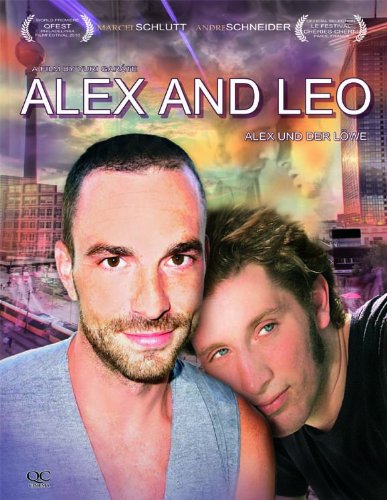
A bikini party is the memorable centerpiece of the German film Alex and Leo, out April 5 on DVD from Breaking Glass Pictures. Set in Berlin, it depicts the challenges the two title characters face in the process of falling in love. Shortly after the two have a brief encounter in a coffee shop, Alex (Andre Schneider) discovers that his longtime boyfriend has been cheating on him. Meanwhile, Leo (Marcel Schlutt, who is too cute, especially when playing drunk) tells his girlfriend of four years that he is gay. She not unpredictably breaks up with him.


Leo and Alex cross paths again in a local cabaret. Alex, still reeling from the end of his relationship, is hesitant to get involved with another man so soon. His friends also caution Alex against getting involved with a "closet case" like Leo. Leo, however, is very attracted to Alex and is anxious to start living an openly gay life.

Alex's hesitance toward Leo begins to falter during the previously mentioned bikini party, at which both male and female guests are required to wear two-piece women's bikinis. I don't know whether this is a traditional German concept or not, but it's fun and there is naturally plenty of flesh on display. Neither Leo nor Alex are model-quality in appearance, but their average looks make their relationship and the movie more believable.

Unfortunately, Alex and Leo (which was written and directed by Ives-Yuri Garate) isn't the most visually attractive film. Many scenes are at times grainy and/or over-lit. This fact and an awful end title song keep it from scoring higher in my critical book, but it is nonetheless a well-acted, sweet and funny take on contemporary gay relationships.


Another new release with romance on its mind is Vampire Boys, from Ariztical Entertainment. Obviously aiming to cash in on the current craze for all things having to do with pretty, ageless bloodsuckers (i.e. the Twilight saga, True Blood and The Vampire Diaries), this direct-to-DVD production features a posse of toned, frequently shirtless dudes who prowl around LA hunting for plasma.

Into their midst comes young, innocent Caleb (Christian Ferrer). The gay college student has just moved to California from Ohio, lured by an online friend named Paul (Ryan Adames). While Paul is hoping for more than just a roommate arrangement with Caleb, the leader of the local vampire squad, Jasin (the truly captivating Jason Lockhart), begins having visions in which Caleb appears as "The One." Jasin needs to mate with "The One" and turn them into a vampire in order for him and his boys to survive.


The vampires had anticipated a woman to be "The One," so they are all initially surprised when Jasin and Caleb become attracted to each other. This is a unique and appreciated twist in the plot of Vampire Boys over the tortured heterosexual love triangle at the center of Twilight, et al. Only one of the vampires (played by Dylan Vox, formerly known as gay porn star Brad Benton) voices objections, so he plots to steal leadership from Jasin.

The film is pretty silly and amateurishly directed by Charlie Vaughn but isn't without its romantic charms. Caleb and Jasin are worth swooning over as their relationship escalates, especially after Jasin "comes out" as a vampire to Caleb and Caleb must decide whether to become a vampire too. I don't like how the character of Paul is treated, however. He is dispatched so unsympathetically and Caleb's concern over Paul's disappearance is so fleeting that Paul ultimately becomes inconsequential. Why have the character in the script in the first place? The producers of this obviously low-budget affair could have spent even less money.

Still, if you like half-naked male vampires (while a couple of their male victims are shown in their full-frontal glory), Vampire Boys may be the movie for you.

Reverend's Ratings:
Alex and Leo: B
Vampire Boys: C

Review by Rev. Chris Carpenter, resident film critic of Movie Dearest and the Blade California.

Pengikut